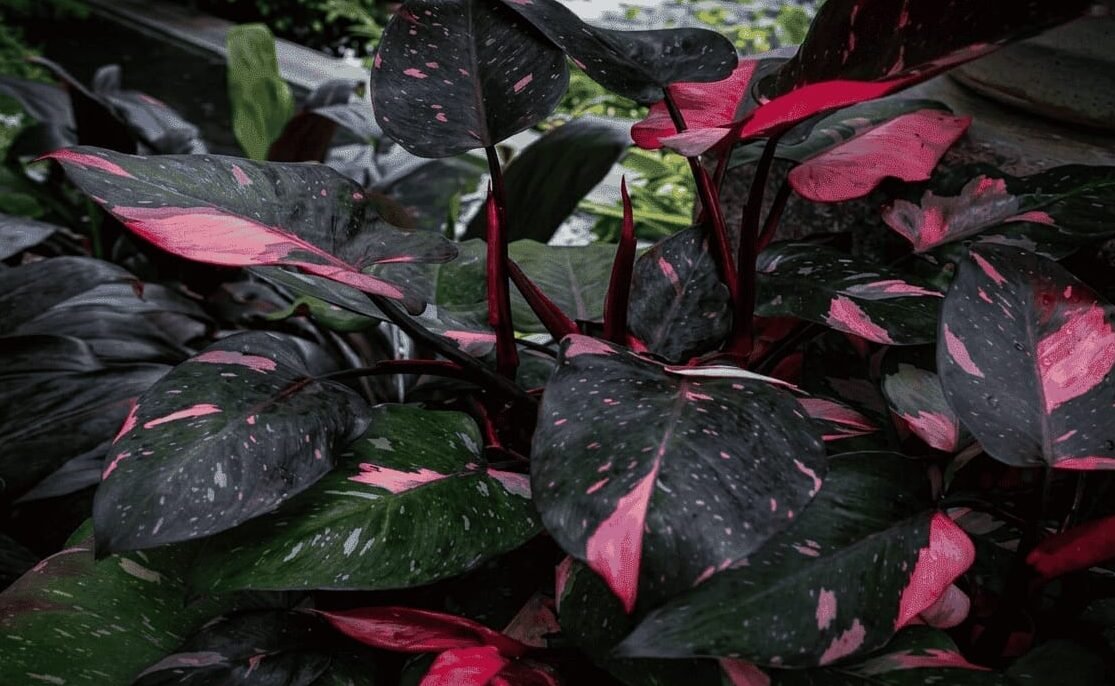
Let’s talk about this plant that has been blown up online and now costs a small fortune per cutting. Philodendron Pink Princess. You may have seen it in groups of plants. Dark, almost black, becoming sprinkled with hot pink. It looks fake at first glance, like someone has spray-painted it, but it grows just like that. With some caveats, we will get into it.
Why is it so hyped? The contrast between the dark leaves and the bright pink spots is stunning, and no two leaves look the same. It was really rare when it first went viral, which blew up on Instagram, and honestly, it’s a bit of a diva to keep it looking good, which makes nailing it feel like a flex among the plant people.
After killing a couple to root rot and finally figuring out what works, here’s the real deal about keeping one alive and thriving.
The Basics:
Light:
Light is important, especially to keep the pink going. Give it bright indirect light near an east window or a few feet from a southwest window with a screen. Direct sun will burn the pink parts because they have little chlorophyll and the sun burns easily. Too little light and you get just plain green, leggy growth.
Watering:
Let the top 2 inches of soil dry out before watering. Standard Aroid advice, but this really matters here. Wet soil is the fastest way to rot roots. How did I lose my first method? Water thoroughly until it comes out the bottom, then throw away the saucer.
Soil:
Don’t use plain potting soil; it holds too much water. Mix it with about equal parts peat moss and cut bark and some horticultural charcoal. You want something chalky and fast-growing, like the dirt floor of a tropical forest.
Humidity:
These are tropical plants, so they like 60 percent humidity. The average home humidity of 30 to 40 percent won’t eliminate it, but a humidifier, pebble tray, or grouping with other plants will significantly improve the quality of the leaves.
No one indeed tells new owners that the pink color doesn’t go away. It comes from a genetic mutation that disrupts chlorophyll production and can be unstable. One day, a completely green leaf appears. It’s annoying but normal.
Here’s what helps:
Max out bright indirect light. reduces chlorophyll in the various parts, so more light is needed to maintain them. Less light pushes the plant towards a simple green growth.
Cut off fully green leaves. This is the most important trick. Green leaves photosynthesize better, so if you leave them hanging around, the plant will tend to grow more green stuff because it’s less work. Cut them off close to a node to push energy back into pink growth.
Look for leaves that are almost all white and pink. The back has a sound but barely any chlorophyll. Leaves that cannot support themselves and often die on their own. The stem behind them becomes weak. Some people also prune them if the plant seems to be struggling.
Feed it lightly. A diluted balanced fertilizer in spring and summer to help it grow strong without overdoing it, as over-stimulating growth can be detrimental to the variety.
Prune above well-differentiated nodes. When pruning back leggy vines, cut just above the node that has a nice pink color. This encourages a similar color in the new growth but does not guarantee it.
Don’t be afraid of an odd leaf. It happens to everyone; just prune it and move on. The next leaf is usually normal again.
None of this guarantees a perfect 50/50 split of pink and black every time. The plant does what it wants sometimes, but sticking to this routine keeps the variety strong for a long time.
How to propagate it:
Once it gets big or leggy, propagating is pretty easy.
You will need: sharp, clean scissors, A pot of water or a small pot of moist soil, optional rooting hormone, and a warm, bright spot.
- Choose a healthy stem section with at least one node, ideally a good variety, as this tends to carry this pattern.
- Cut cleanly at about a 45-degree angle below a node, including one or two nodes and, if possible, leaves.
- Let the cut dry in direct sunlight for 30-60 minutes. Optional but helps prevent rotting.
- Root it either in water with the node submerged, leaves above water, in bright indirect light, or in a potting mix dipped in rooting hormone. Cover the plant in a chunky mix for moisture.
- Be patient. Roots will appear in 2-4 weeks. Change the water weekly. Keep the soil moist but not soggy. Do not pull it to check for growth.
- When the roots are 1 or 2 inches long, put them in their own mixture and keep them warm and moist until they set.
The roots of this plant are quite reliable compared to other fine-leafed aroids, so don’t push too hard; don’t go straight to a larger pot.
Problems that beginners face:
- Yellow leaves: These are usually too much water. Check the roots. Healthy ones are white-tan and strong. Rotten ones are whole and swollen. Trim the rot. Repot in dry mix. Water less frequently.
- Brown crusty edges: Low humidity or too much direct sun. Move it and boost humidity.
- Green leaves instead of pink: General instability. Prune. Increase light. Don’t panic.
- Mealybugs/spider mites: Clean leaves. Treat frequently with insecticidal soap or neem oil. Isolate from other plants.
- Dry leaves despite moist soil: Overwatering at first may cause root rot. Damaged roots cannot absorb water properly. Check and trim the roots.
- Leg growth with large gaps: This needs more light. Move it to a bright spot and prune to encourage bush growth.
At the end: This plant totally earns the hype. Once you get the hang of light watering and pruning, it’s not as difficult as its reputation suggests. It does require a little more attention than your average pothos.